
Millions of Americans hoping to start or expand their family struggle with infertility. After learning of their diagnosis, these patients may face invasive and highly specialized care from expert healthcare providers including Reproductive Endocrinologists and Embryologists for an attempt at pregnancy. Much of this care is not covered by standard insurance plans and patients are forced to pay out-of-pocket for needed medical care to build or grow their families. The World Health Organization and the American Medical Association classify infertility as a disease, and it should be treated as a medical necessity and covered by insurance like any other disease.
According to the Centers for Disease Control and Prevention, about nine percent of men and eleven percent of women of reproductive age have experienced fertility problems. To have an attempt at pregnancy, people may need assisted reproductive technologies (ART), like in vitro fertilization (IVF). In fact, approximately two percent of all births in the United States every year are the result of ART.
A single IVF cycle can cost thousands of dollars and patients may need to try multiple cycles for the birth of a child. Paying out-of-pocket for this care inevitably leads to inequities, where only those with means or those willing to go deep into debt can realize the dream of parenthood.
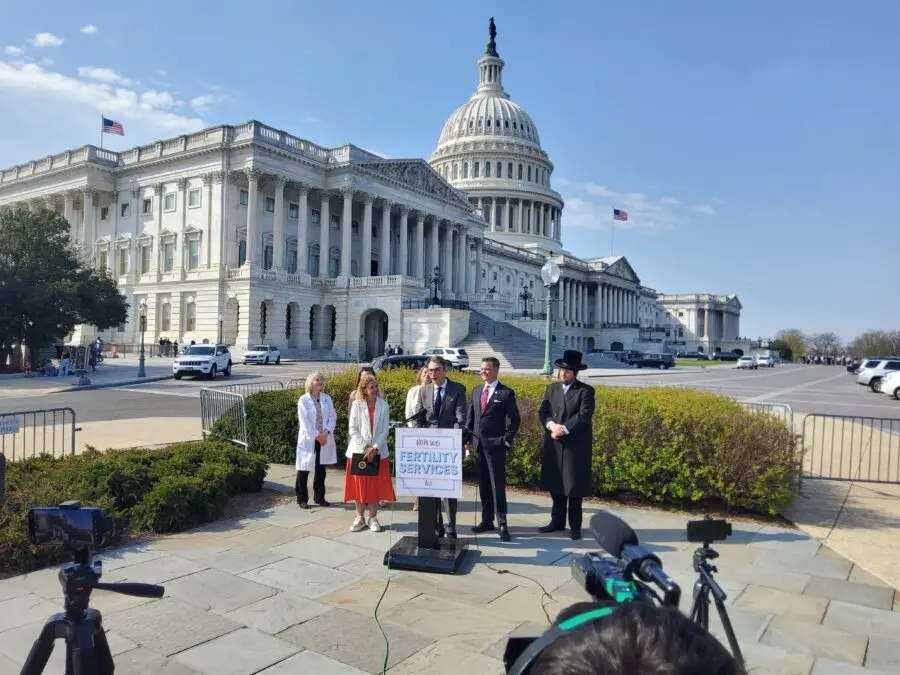
That is why Americans for IVF, the American Society for Reproductive Medicine (ASRM), and RESOLVE: The National Infertility Association endorse H.R.8821, HOPE with Fertility Services Act, introduced by Representatives Lori Chavez-DeRemer, Susan Wild, Debbie Wasserman Schultz, and Zachary Nunn. This bill would amend the Employee Retirement Income Security Act (ERISA) to require insurance plans governed by ERISA to cover all fertility treatments for their enrollees that are diagnosed with infertility. Since almost all employer sponsored health insurance in the U.S. are ERISA plans, this will have the effect of ensuring that almost all employees will have access to IVF, making this our best chance at covering the most Americans this Congress.
We ask you to please sign on as a co-sponsor of HOPE with Fertility Services Act and help us ensure that these pro-family medical treatments are accessible for everyone who needs them.
Sincerely,