
Introducing Real Voices of IVF — a series where the people closest to the issue share their own stories.
First up: Dr. Joshua Klein, MD, FACOG, a reproductive endocrinologist and co-founder of Extend Fertility.
Dr. Joshua Klein says the biggest barrier he sees for patients isn’t medicine — it’s cost. A single IVF cycle can run tens of thousands of dollars, and for many of his patients, whether insurance covers it is what determines whether they can try at all.
The Pattern He Sees Every Week
“As a reproductive endocrinologist, I see patients who are medically ready to pursue IVF but unable to move forward because of the cost,” Dr. Klein says.
It’s a scene that repeats itself in his Manhattan clinic almost every week: a patient who is medically ready for treatment, running the numbers on a five-figure price tag before care can even begin. Some move forward anyway, taking on debt or draining savings. Others put treatment off another year, hoping their circumstances change before their fertility does.
A Career Built Around Fertility Care
Dr. Klein is a board-certified reproductive endocrinologist and co-founder of Extend Fertility, where he specializes in IVF, egg freezing, and fertility preservation. He is also an assistant clinical professor at the Icahn School of Medicine at Mount Sinai, training the next generation of physicians to recognize the same gap between medical readiness and financial access in their own patients. That’s part of why he’s stayed in the field: the moments when a patient moves from diagnosis to a successful pregnancy, and the chance to teach other doctors to recognize cost — not medicine — as the real obstacle standing in the way.
Why He Brings This to the Advisory Board Table
Dr. Klein joined the Americans for IVF Advisory Board because he sees this gap as one that policy — not medicine — needs to close. His role isn’t to argue that IVF works; the science already speaks for itself. It’s to make sure the people shaping insurance policy understand that “medically ready” and “financially able” are two different bars, and right now, only one of them is guaranteed.
Where This Fits Into AIVF’s Broader Legislative Work
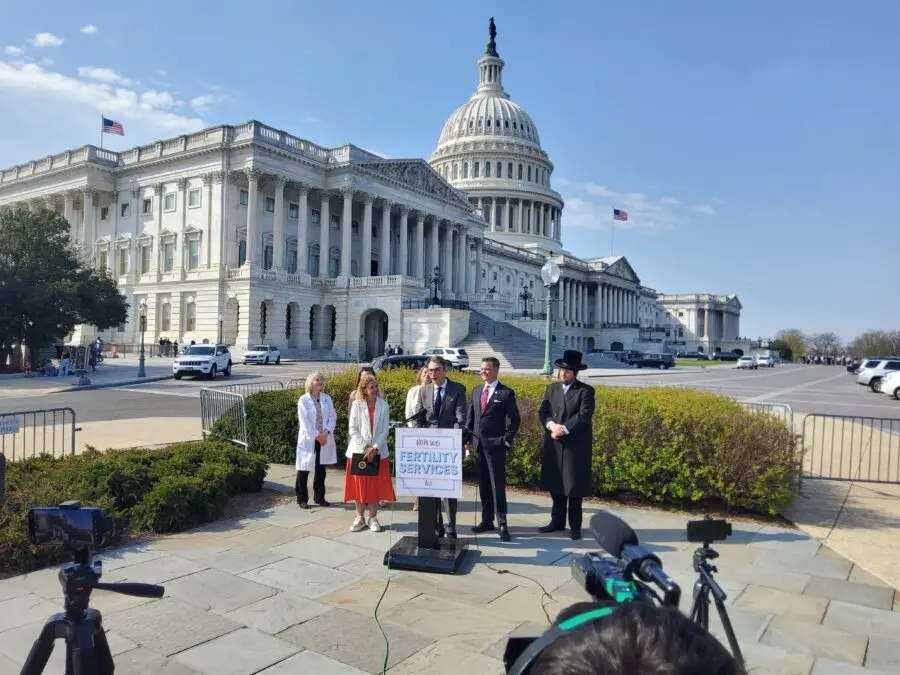
Dr. Klein’s work is grounded in advocating for the HOPE with Fertility Services Act (“HOPE Act”): requiring private insurance to cover infertility treatment as a medical necessity, not an elective expense. Read more about what bills like the HOPE Act would change on our FAQ page.
→ Contact your representative to support the HOPE Act — and follow our full federal campaign.