
Following the midterm elections, the organization calls on both parties to advance the HOPE Act and expand fertility coverage through employer health plans.
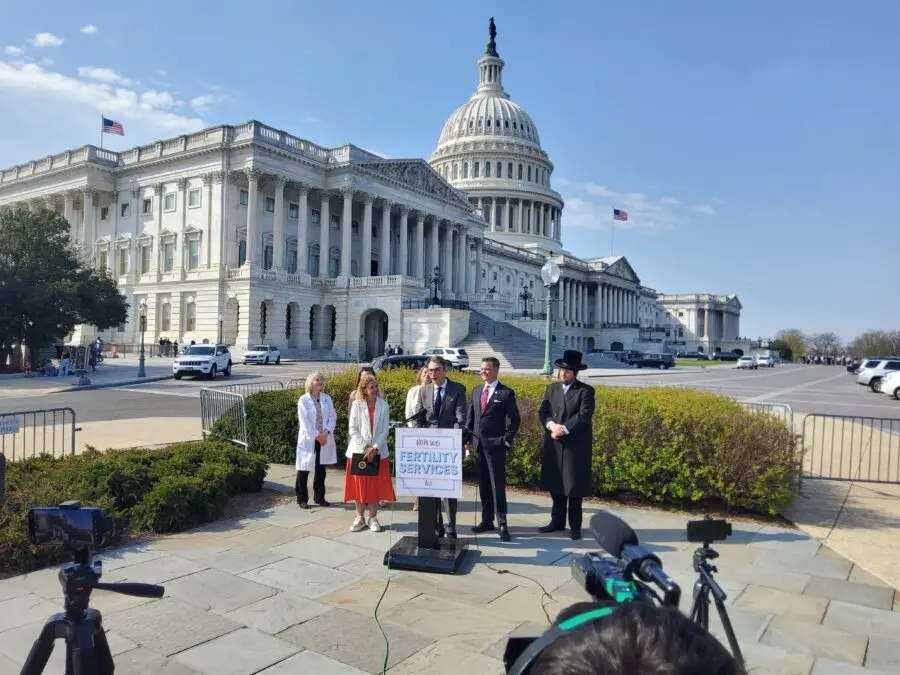
WASHINGTON, D.C. — Americans for IVF today urged President Trump and congressional leaders from both parties to reintroduce and advance the HOPE with Fertility Services Act (H.R. 8119) early in the new Congress. The bipartisan bill would expand insurance coverage for in vitro fertilization (IVF) and other fertility care.
With a divided government ahead, President Trump and congressional Democrats will both be looking for legislative wins they can actually deliver and take back to voters. For President Trump, the bipartisan HOPE Act gives an opportunity to act on his campaign pledge to cover IVF costs. For Democrats, it’s a chance to deliver on a coverage priority they’ve championed in Congress.
“President Trump and congressional Democrats will have plenty to fight about over the next two years. IVF coverage doesn’t have to be one of those fights,” said Rabbi Moshe Margaretten, chairman of Americans for IVF. “Both sides can take credit for getting something done, and families who’ve been priced out of IVF would have the most to gain.”
A Bipartisan Path to Coverage
Originally introduced by Reps. Zach Nunn (R-IA) and Debbie Wasserman Schultz (D-FL), the HOPE with Fertility Services Act would require qualifying group health plans and insurers that cover obstetrical services to also cover infertility diagnosis and treatment, including IVF, as well as fertility preservation. Because the current Congress ends in January, the bill will need to be reintroduced when the new Congress convenes. Although Congressman Nunn lost his election, as well as other Republican cosponsors, AIVF is confident other Republicans will come forward to take their places.
The proposal addresses a central barrier to care: whether a patient’s health plan covers the treatment they need. For families without fertility benefits, the cost of IVF can mean delaying treatment, taking on debt, or never starting at all.
“Patients facing infertility aren’t thinking about political parties,” said Dr. Joshua Klein, a fertility specialist and Americans for IVF Advisory Board member. “They’re thinking about whether they can afford the treatment that could help them have a child.”
Turning Shared Priorities Into Action
As Washington turns from the campaign to the legislative agenda, Americans for IVF is urging leaders to move beyond statements of support and take concrete steps toward expanding coverage:
- White House: Publicly endorse the HOPE Act and work with its sponsors to advance it.
- House committee leaders: Hold a hearing on the bill early in the new session to examine coverage gaps and hear directly from patients, physicians, employers, and insurers.
- Congressional leaders from both parties: Reintroduce the HOPE Act with bipartisan sponsors early in the new Congress, build support, and bring the legislation to a vote.
Americans for IVF will continue bringing patients and physicians into discussions with lawmakers, federal agencies, and the White House so the people facing these costs can help shape the policies that address them.
Learn more about Americans for IVF and the HOPE Act at https://americansforivf.org/hope-act/.
About Americans for IVF
Americans for IVF is a national advocacy organization dedicated to expanding access to fertility treatment and advancing practical, market-oriented policies that help individuals and families obtain affordable fertility care, including IVF. The organization works with patients, physicians, employers, insurers, policymakers, and other stakeholders to make parenthood attainable for more Americans. For more information, visit https://americansforivf.org.
Media Contact
Gabi Victor
(732) 614-9111
tzedek@fenton.com
# # #